
Category: All
Chasing AI Too Early? Here’s Why It Might Kill Your MVP
It’s 2025, and every startup pitch seems to start with two letters: A.I. From funding decks to founder dreams, AI in MVP development has become a buzzword that investors expect and founders feel pressured to include.
Samrat
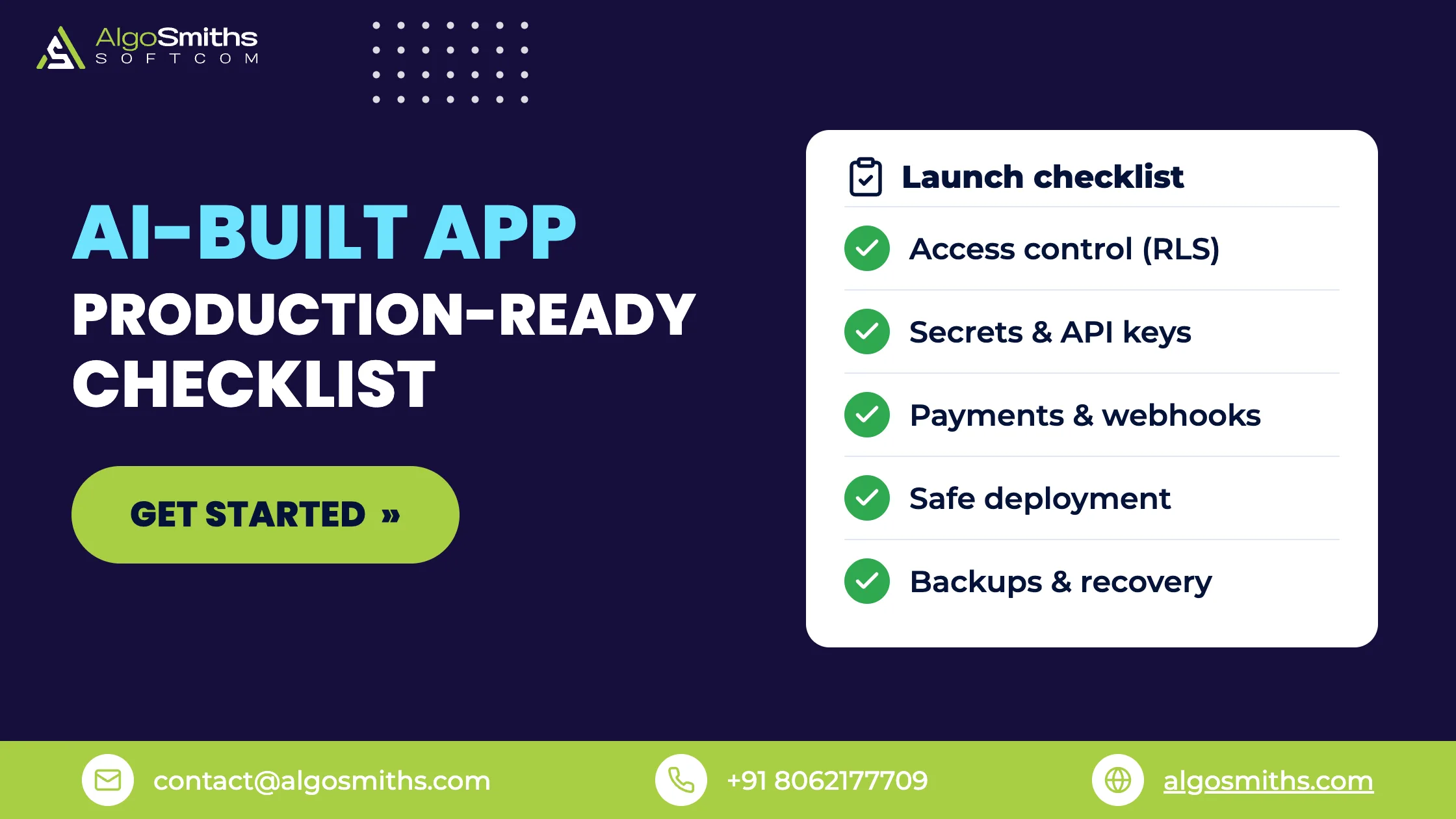
AI-Built App Production Readiness: A Founder's Launch Checklist
AI-built app production readiness explained: what to fix in a Lovable or Bolt app before real users and payments arrive, with a clear launch checklist.
Samrat
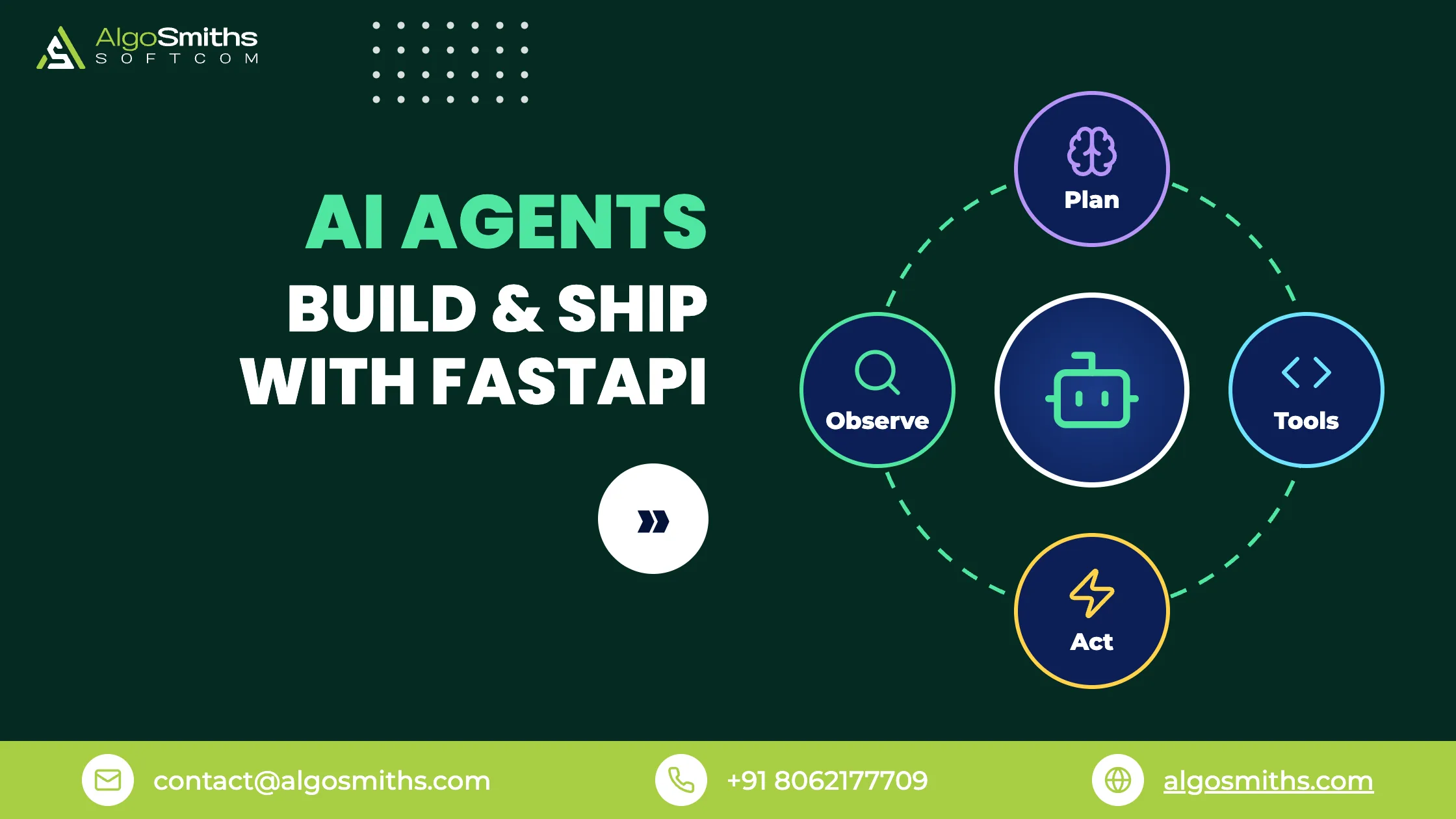
AI Agents for Startups: A Practical Guide to Building and Shipping Them with FastAPI
AI agents are moving fast from flashy demos to real product features, but most startups don't know where to draw the line between a good use case and an expensive distraction. This guide breaks down what an AI agent actually is, when it's the right call for your startup, and how to design, build, and deploy a production-ready agent using FastAPI. You'll get a practical architecture breakdown, a step-by-step build guide, a framework comparison, and the guardrails that separate a reliable feature from a support nightmare.
Samrat
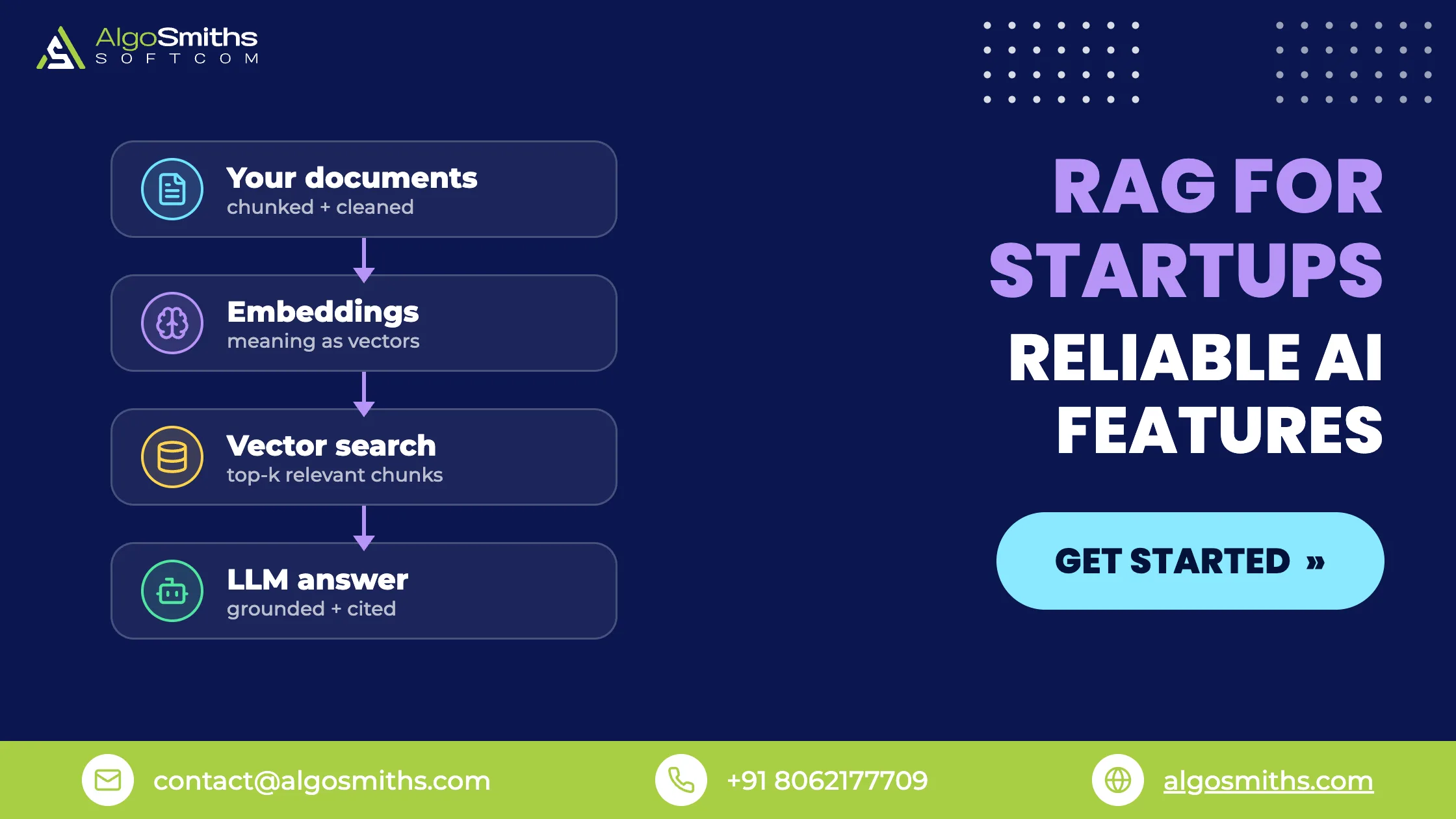
RAG for Startups: A Founder's Guide to Building Reliable AI Features in 2026
Retrieval-Augmented Generation (RAG) has become the standard way to make AI features trustworthy, current, and grounded in your own data instead of a model's frozen training set. This founder-friendly guide breaks down how RAG actually works, when it beats fine-tuning, and what it takes to ship a production-ready pipeline with FastAPI and a vector database. You'll also learn the 2026 architectural patterns worth knowing, from hybrid search to Agentic RAG, plus the mistakes that most often cause AI features to fail once real users show up.
Samrat
How to Scale Your MVP into a Production-Ready SaaS Without a Rewrite
Your MVP found traction — now it has to hold up under real users, real data, and real revenue. This founder-friendly guide shows you how to turn a scrappy MVP into a production-ready SaaS the right way: what to harden first, how to tackle technical debt without stalling growth, and how to scale your database, infrastructure, and team without an expensive rewrite.
Samrat
Background Jobs and Task Queues for Startups: A Founder's Guide to Doing Work Outside the Request
Some work is too slow to run while a user waits — sending emails, processing payments, generating exports, or calling an AI model. This founder-friendly guide explains background jobs and task queues in plain terms: what they are, when your product needs them, and how to add them to a Django or FastAPI backend without over-engineering. You'll get a Celery vs. alternatives comparison, a practical implementation roadmap, and the reliability mistakes that quietly cost startups data and trust.
Samrat

Scaling a Business? Here's How Smart Tools Keep You Focused on Growth
Scaling a small business isn’t just about dreaming big—it’s about making smart, strategic moves that set you up for long-term success. If you're looking to grow in 2025, you need a plan that balances ambition with financial readiness, operational efficiency, and market demand. In this guide, we break down the key steps to assessing your growth potential, navigating different business stages, and implementing strategies that lead to sustainable expansion.
Anagha Masane
PostgreSQL vs MongoDB for Startups: Which Database Should You Choose for Your MVP in 2026?
Choosing between PostgreSQL and MongoDB is one of the first architecture decisions that shapes how fast you can ship and how painful your first scaling headache will be. This founder-friendly guide breaks down how relational and document databases actually work, compares them head-to-head on the factors that matter to an early-stage team, and gives you a practical framework for picking the right one for your MVP in 2026. You'll also learn why Postgres's JSONB support and the pgvector extension are quietly closing the gap that once made NoSQL the default pick for fast-moving startups.
Samrat

Secrets Management for Startups: A Founder's Guide to Handling API Keys, Environment Variables, and Credentials Safely in 2026
Every startup runs on a pile of API keys, database passwords, and tokens — and one leaked secret can drain your cloud budget or expose customer data overnight. This founder-friendly guide explains what secrets management is, why .env files stop being enough as you grow, and how to store, rotate, and audit credentials safely. You'll get practical patterns, tool comparisons, and a step-by-step rollout you can ship without a dedicated security team.
Samrat
Rate Limiting for Startups: A Founder's Guide to Protecting Your API and Controlling Costs in 2026
One abusive script, a runaway integration, or a sudden traffic spike can take your app down or run up a five-figure cloud bill overnight. This founder-friendly guide explains what rate limiting is, the algorithms that power it, where to enforce it, and how to roll it out on your MVP without frustrating real users. You'll get practical examples, a comparison of the main approaches, and a checklist you can apply this week.
Samrat

The Role of Technology in Scaling Your Business
In the corporate world, expanding and competing in the market involves effective strategies. Technology is the major driver of this process since it enables any size of business to enhance productivity, streamline processes, and tap into new markets. In this article, we examine how technology can be the determinant of scaling your business and making it competitive.
Anagha Masane

How Much Does It Cost to Build an MVP in 2026? A Founder's Complete Pricing Guide
Wondering what it really costs to build an MVP in 2026? This founder-friendly guide breaks down MVP pricing across freelancers, agencies, and in-house teams, with realistic cost ranges by feature and complexity. Learn where budgets quietly leak, how to scope for a fixed price, and how to ship a market-ready product without burning your runway.
Samrat
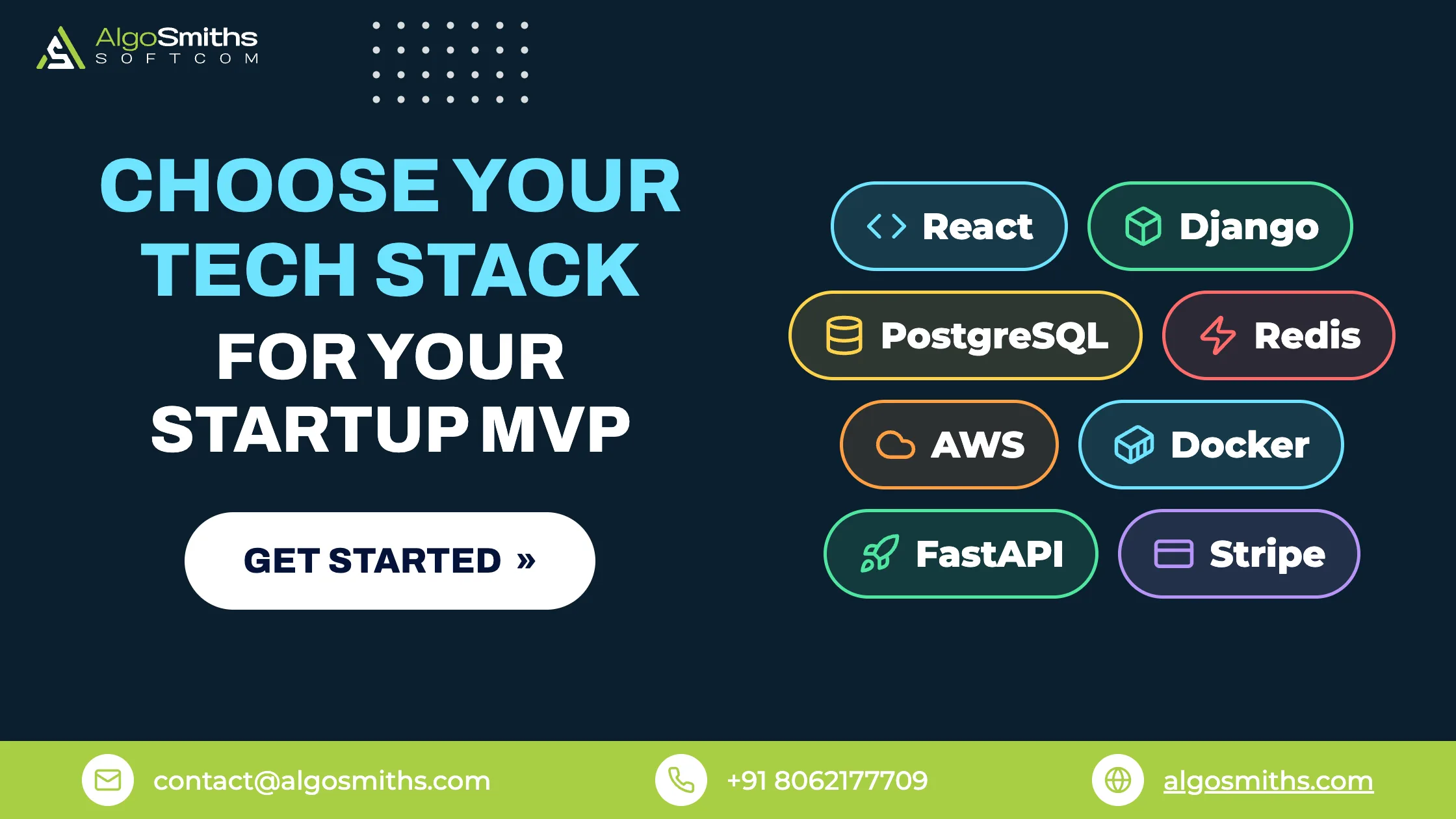
How to Choose the Right Tech Stack for Your Startup MVP in 2026
Choosing a tech stack is one of the earliest and most expensive decisions a founder makes. This practical guide walks you through how to pick the right frontend, backend, database, and cloud setup for your MVP in 2026 — with real comparisons, common mistakes to avoid, and a decision framework you can apply this week.
Samrat
How to Launch a Startup Without a Tech Co-Founder (Even If You Can’t Code)
If you’ve ever had a great startup idea but didn’t know how to code, you’ve probably felt stuck. Maybe you’ve tried finding a technical co-founder, only to hit a wall. Investors, mentors, and even peers might have told you, “Find a CTO first — otherwise you won’t get anywhere.”
Samrat
Django REST Framework vs FastAPI: Which Python API Framework is Right for You?
If you're building a new product or MVP and debating between Django REST Framework and FastAPI, you're not alone. The Django vs FastAPI debate is one of the most common among startups and engineering teams deciding on the ideal backend for their API development.
Samrat

HR in the Digital Age: How Modern HR Software Enhances Employee Experience
The landscape of human resources (HR) has transformed significantly over the past decade. Once seen primarily as a back-office function responsible for hiring, payroll, and compliance, HR has evolved into a strategic partner in driving organizational success. This shift has been catalyzed by technological advancements, changing workforce dynamics, and a growing recognition of the importance of employee engagement and well-being. As organizations strive to stay competitive in an increasingly digital world, HR professionals are now expected to wear multiple hats, from data analyst to culture ambassador.
Anagha Masane

Multi-Tenant SaaS Architecture: A Founder's Guide to Building It Right the First Time
Building a multi-tenant SaaS product means locking in foundational architecture decisions before you write your first line of code. This guide breaks down the three core multi-tenancy models, shows you how to choose between shared and isolated databases, and highlights the security and scaling mistakes that force a costly rewrite later. Whether you're scoping your first B2B MVP or preparing to onboard your first enterprise customer, this is the practical framework to get your architecture right the first time.
Samrat
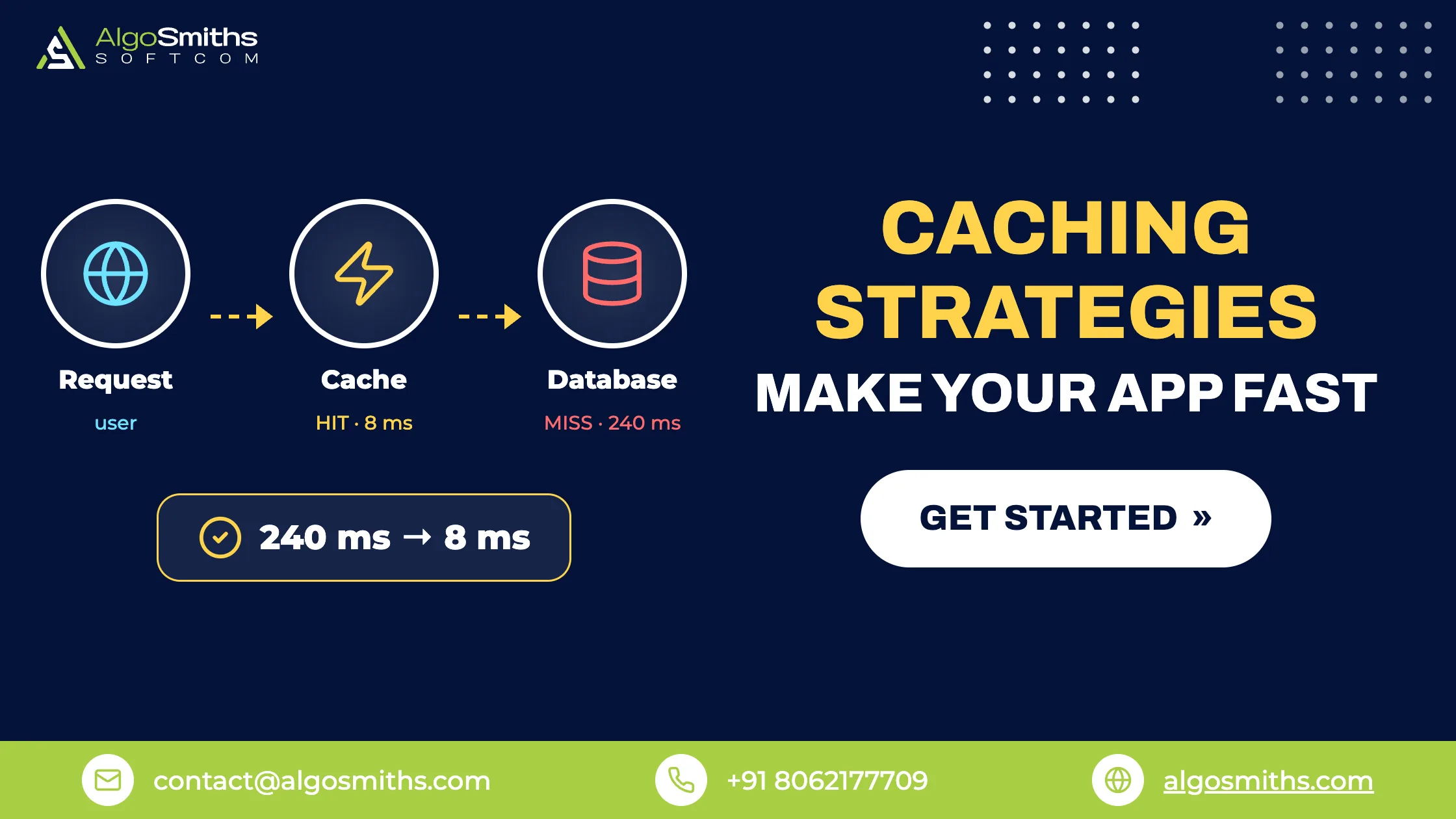
Caching Strategies for Startups: A Founder's Guide to Making Your App Fast Without a Rewrite in 2026
Slow apps lose users and burn money on oversized servers, but most startups reach for a bigger database long before they reach for a cache. This founder-friendly guide explains what caching is, where to add it, and which strategy fits your MVP. You'll get practical patterns for Redis, HTTP, and database caching, plus the mistakes that quietly corrupt your data.
Samrat
No Technical Co-Founder? No Problem. Here’s How You Can Still Launch Your Startup
If you’ve ever said, “I have a great idea, but I need a tech co-founder to build it”, — you’re not alone. One of the most common myths in the startup world is that you can’t launch a tech company without a technical co-founder. It’s a belief that keeps thousands of smart, capable founders stuck in the idea phase — waiting, pitching, or getting ghosted by developers who want “more traction” before they commit.
Samrat

Why Every Business Needs a Cybersecurity Audit
Every Business Needs a Cybersecurity Audit distinguishes, investigates, and assesses cyber dangers in your commerce to guarantee the security and keenness of your information. This handle includes assessing current security measures, distinguishing vulnerabilities, and actualizing the fitting security measures to avoid down-times or cyberattacks. A cyber security Audit appraisal is a continuous handle that makes a difference you remain on best of your IT security and adjust to advancing dangers. The handle includes figuring out your potential dangers and their eventual outcomes so you can execute the right arrangements some time recently. Businesses of all sizes can benefit from customary cyber security review administrations, which can come in an assortment of appraisal sorts. One of which is our Dim Web Filter which makes a difference when businesses find any dangers to their private information and/or any compromised representative qualifications. Advance to this, we can too run cyber security evaluations to troubleshoot or relieve dangers encompassing Ransomware Assaults. These sorts of cyber assaults are when businesses have their information and gadgets scrambled and held for emancipation by cyber offenders looking for a payout for the unscrambling key, something that most businesses fair aren't arranged for.