AI App Development Cost: What an LLM Product Costs to Build and Run
On this page
AI app development cost in 2026: build budgets from proof of concept to production, and a monthly model bill worked from live prices.
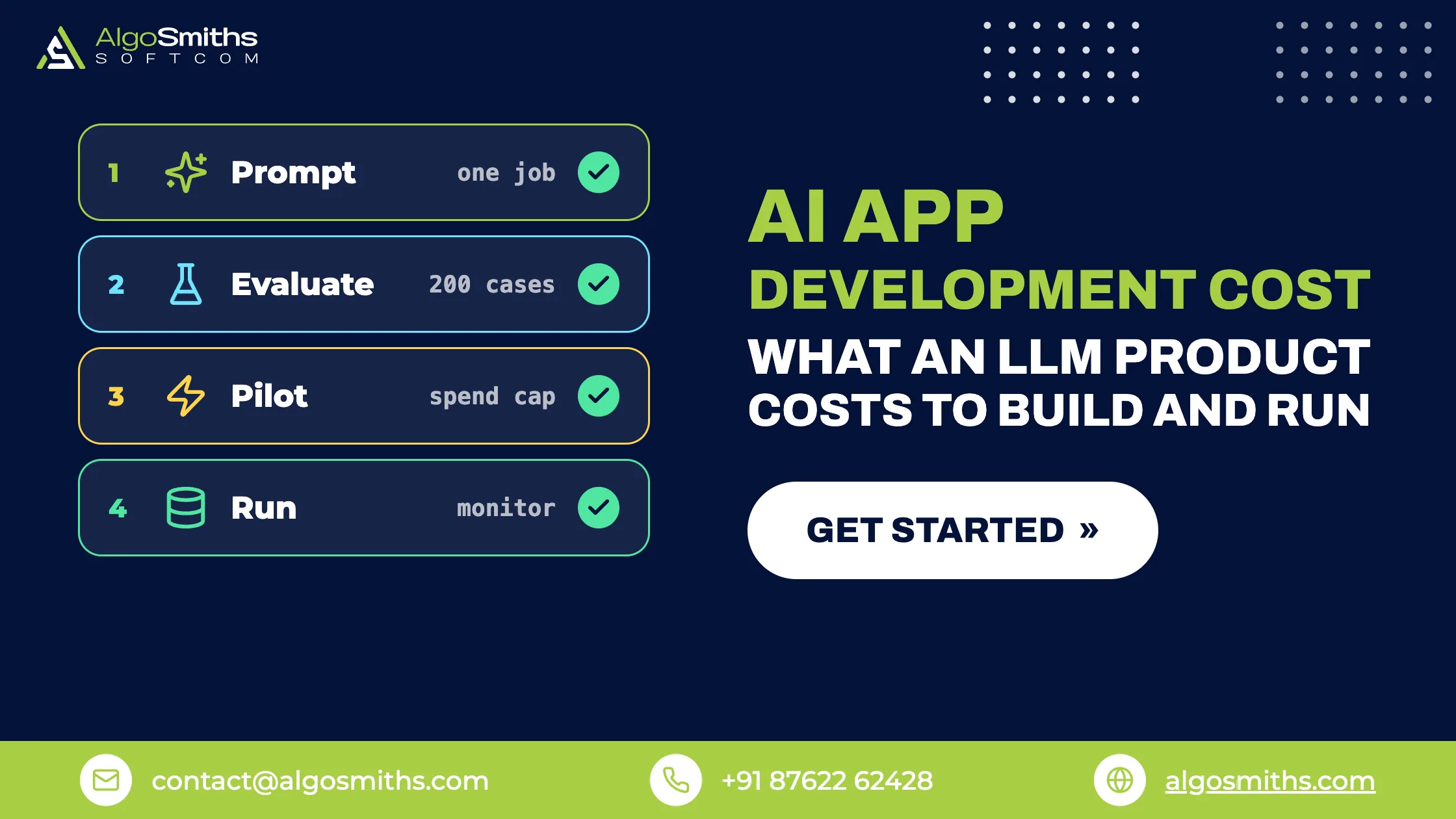
AI app development cost depends on how far you take the first version. One agency's tier table puts an AI proof of concept at $15,000 to $50,000 and a mid-market production system at $80,000 to $250,000. This guide shows what those numbers pay for. It lists the lines a founder's budget tends to miss and shows how to scope a first version small enough to test before you commit the larger sum.
This guide serves founders and product owners who are about to ask for quotes on an LLM feature or product. It covers the price bands from three sources, the lines a quote should list, a year-one total, and a monthly model bill worked from live prices. Running cost per user is a separate question, which our LLM API costs guide answers in depth, and general MVP pricing sits in our guide to what an MVP costs in 2026.
Treat every agency figure below as an asking price. Netguru's AI development cost guide comes from a vendor that sells AI builds, and the Rocketech MVP Price Index reads the public websites of 95 agencies. Neither source audits invoices. Model prices come from Anthropic's pricing page, which we read on 25 November 2026, and the arithmetic on them is ours.
Key takeaways
- Netguru's tier table puts an AI proof of concept at $15,000 to $50,000 over 3 to 6 weeks, and mid-market production at $80,000 to $250,000 over 3 to 6 months.
- At the 15 agencies that price both, Rocketech found the cheapest AI MVP costs a median 4.8 times the cheapest regular MVP, with the middle half of agencies between 3.0 and 5.7 times.
- Model calls cost little next to the build. A meeting summariser that handles 3,000 meetings a month costs $51 on Claude Sonnet 5.5 and $2.55 on Claude Haiku 5.5 at list prices.
- Generating the answers for a 200-case evaluation run costs $3.40 on Sonnet 5.5, before any scoring step. The time to write the cases sits outside that number.
- Netguru states that a typical year-one total runs 1.5 to 2 times the build figure, so ask any vendor for both numbers.
- In Rocketech's index, 16 of the 71 agencies with a price give AI work its own line, so check that a quote's scope names the AI work.
What does AI app development cost in 2026?
Plan on $15,000 to $50,000 for a proof of concept and $80,000 to $250,000 for production at a vendor that prices like Netguru. Rocketech's index puts the median cheapest AI MVP at $40,000 across the 15 agencies that price both, and our pricing page starts AI work at $12,999.
| Source and scope | Published price | Timeline or note |
|---|---|---|
| Netguru tier table (updated 21 Jul 2026): proof of concept | $15,000 to $50,000 | 3 to 6 weeks, 2 to 3 engineers |
| Netguru tier table: mid-market production | $80,000 to $250,000 | 3 to 6 months, 4 to 7 engineers |
| Netguru by application: conversational AI with an LLM and retrieval | $30,000 to $120,000 | No timeline given |
| Netguru by application: agentic AI | $80,000 to $200,000 and up | No timeline given |
| Rocketech (1 Oct 2026): cheapest AI MVP, median of 15 agencies that price both | $40,000 | Cheapest regular MVP at the same agencies: $8,900 |
| AlgoSmiths pricing page (read 25 Nov 2026): AI features sit in the Scale tier | From $12,999 | 4 weeks and up, in phases, each phase at its own fixed price |
Netguru's two tables differ: its summary table gives $15K to $60K for a proof of concept and $80K to $350K for mid-market, and its tier table gives $15,000 to $50,000 and $80,000 to $250,000. We quote the tier table. The 4.8 times figure from Rocketech is the median of each agency's own ratio. It does not equal $40,000 divided by $8,900, which is why we print it as Rocketech states it.
Read each quote for its scope before its price. In Rocketech's index, 16 of the 71 agencies with a visible price show AI work on its own line, so ask whether an MVP quote includes the AI feature. Two of the agencies run the other way: one prices AI MVPs the same as regular ones, and another starts AI MVPs at $5,000 against $15,000 for its general MVP.
What does the AI premium pay for?
It pays for work a regular MVP does not need. A product that calls a hosted model needs a login and a database like any other product, and it adds the lines below. Ask a vendor to give each one its own price.
- Prompt and product logic. The instructions and the response format, plus the code that turns a model answer into a screen.
- Data access. Retrieval over your documents, covered in our RAG guide for startups, adds a pipeline to build and a store to run.
- An evaluation set. A fixed list of real inputs with the answer you expect, so a change to the prompt or the model gets a score.
- Guardrails and fallbacks. What the product does when the model refuses or returns a malformed answer.
- Spend controls. A token limit per request and a monthly cap, so one loop cannot run up the bill.
- Monitoring. Cost per user and error rates, with a weekly sample of answers that a person reads.
Netguru's guide lists eight cost drivers: data labeling and annotation, inference compute, fine-tuning, retraining cadence, human review, MLOps infrastructure, RAG architecture and p95 latency targets. In our reading, a product that calls a hosted model skips fine-tuning and retraining, which removes two of the eight.
How do you scope a first version small enough to test?
Start with one job that has one input and one output, and test it with a plain prompt before you pay for anything larger. Netguru's proof-of-concept tier of 3 to 6 weeks with 2 to 3 engineers shows how short that first test can be.
- Pick one job, such as summarising a meeting or extracting fields from an invoice.
- Write 50 to 200 real examples with the answer you expect before anyone builds a screen.
- Run the examples through a hosted model with a plain prompt and score the answers.
- Add retrieval when the failures trace to missing knowledge, and move to a larger model when the small one fails your scorecard.
- Release to a few users behind a feature flag with a spend cap, and read their answers.
Each step ends with a measurement, so a failure shows up before you pay for the next step. The measurements give a vendor something concrete to quote against.
What do evaluation and model calls cost?
We used one workload throughout: a meeting summariser that reads a 6,000-token transcript and writes a 500-token summary. At list prices of $2 per million input tokens and $10 per million output tokens for Claude Sonnet 5.5, and $0.10 and $0.50 for Claude Haiku 5.5 on prompts up to 100,000 tokens, the arithmetic comes out as follows.
| Task | Tokens | Claude Sonnet 5.5 | Claude Haiku 5.5 |
|---|---|---|---|
| One evaluation run of 200 cases (answers generated, no scoring step) | 1,200,000 in, 100,000 out | $3.40 | $0.17 |
| One month of 3,000 meetings | 18,000,000 in, 1,500,000 out | $51.00 | $2.55 |
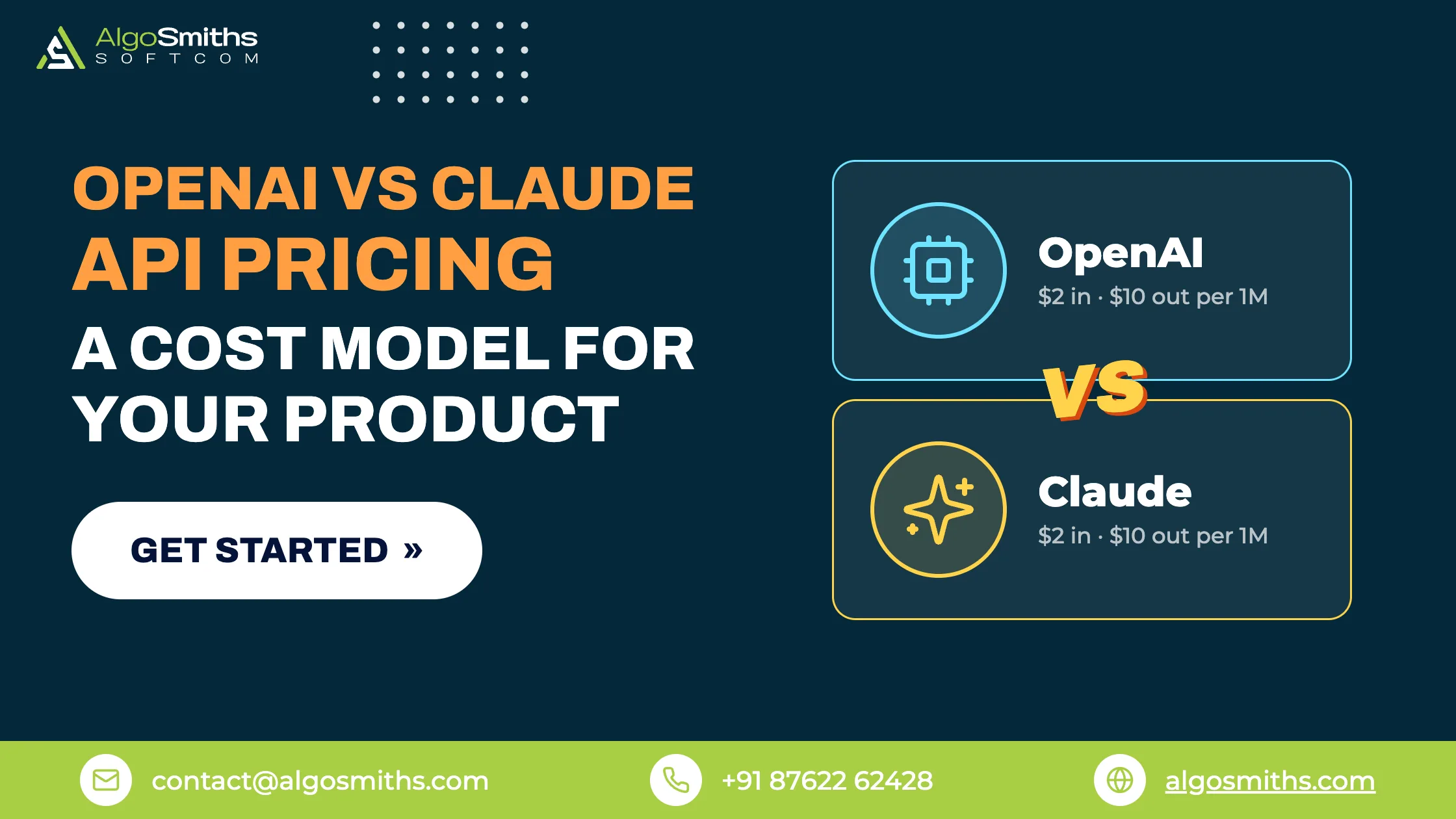
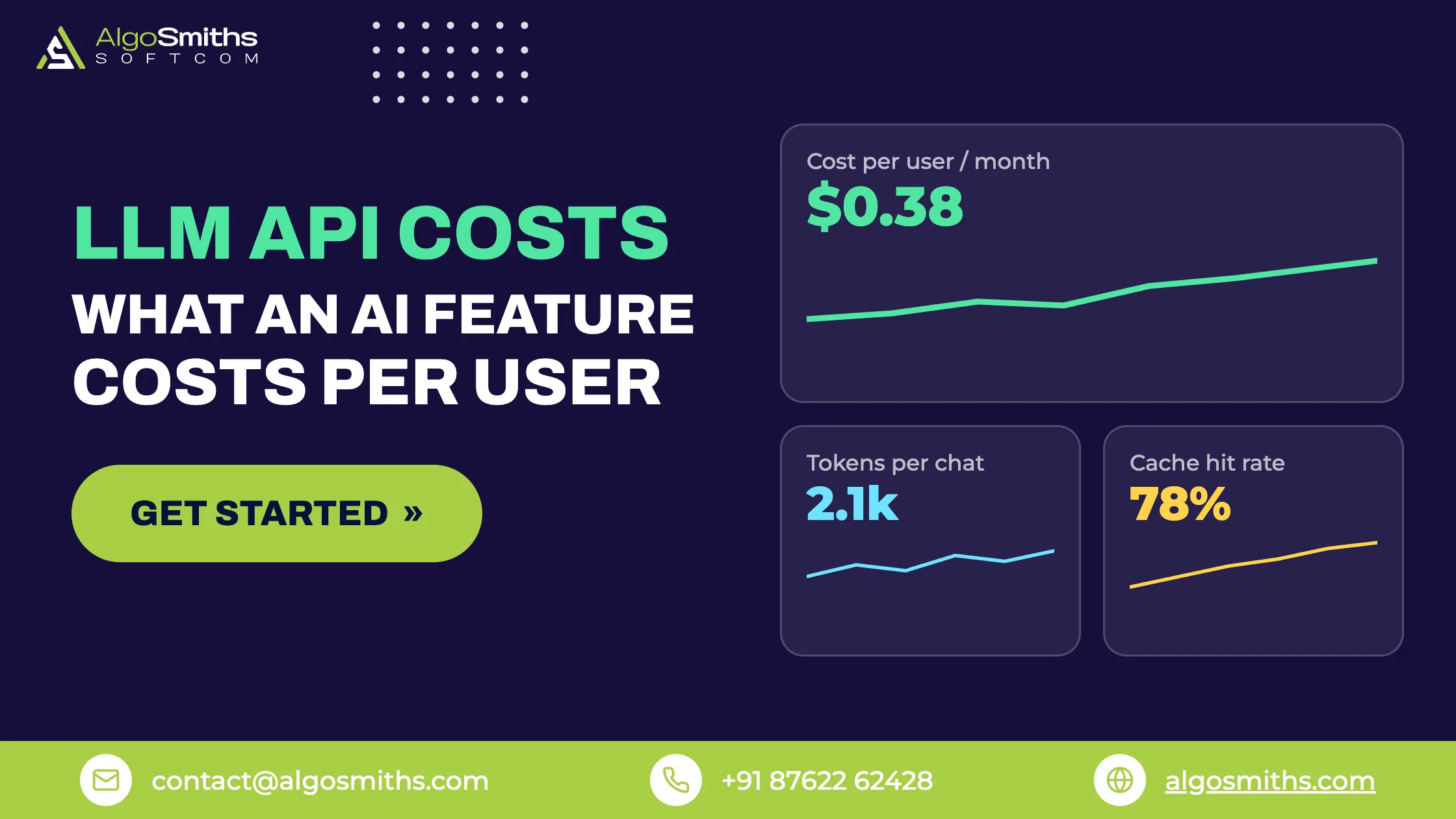
The Batch API cuts both figures by 50 percent for work nobody waits on, and an evaluation run suits that. The 200-case run costs $1.70 on Sonnet 5.5 in a batch. The model cost of an evaluation is small. The work that remains is writing 200 good cases and reading the failures, and neither shows up in the token bill. Our LLM API costs guide shows how to turn tokens into cost per user, and our OpenAI vs Claude API pricing guide compares the two vendors' price lists.
What does year one cost?
More than the build figure. Netguru states that a typical year-one total runs 1.5 to 2 times the build number, and its mid-market example builds for $180,000 and runs $300,000 to $400,000 by month 18. That example covers a larger system with retraining and annotation, and it does not describe a small API-based feature.
For a small feature, our summariser example puts the model bill between $2.55 and $51 a month, and someone has to maintain the feature as well. Our care plan starts at $249 a month and includes monitoring and monthly fixes. Ask any vendor, us included, whether prompt changes and model migrations sit inside a plan or bill as new work.
What should an AI quote list?
- The model and who holds the API account.
- The evaluation set and who owns it afterwards.
- A token budget per request and a monthly spend cap.
- Monitoring for cost and for bad answers, with a named owner.
- What happens when the vendor changes a price or retires a model.
- Code and prompts in your own repository.
- A year-one run figure printed next to the build figure.
- How the price changes if you add retrieval over your own documents.
Common mistakes
- Budgeting the model bill and skipping the weeks of human time spent testing answers.
- Paying for a custom or fine-tuned model before a plain prompt has failed your own test set.
- Comparing two quotes whose scope differs, such as one that names the AI work and one that does not.
- Sizing the bill at flagship prices when the small tier passes the evaluation: $51 against $2.55 a month in our example.
Frequently asked questions
How much does it cost to build an AI app?
Published asking prices run from $15,000 to $50,000 for a proof of concept to $80,000 to $250,000 for a mid-market production system, per Netguru's tier table. Our pricing page lists AI features in the Scale tier from $12,999, in phases. A written scope with a fixed price is the figure that counts.
Does an AI MVP cost more than a regular MVP?
At the 15 agencies in Rocketech's index that price both, the cheapest AI MVP costs a median 4.8 times the cheapest regular MVP. The middle half of agencies sit between 3.0 and 5.7 times. Two agencies charge the same or less for AI. Our earlier guide to MVP pricing covers the regular MVP side.
How much does it cost to run an LLM feature each month?
It depends on tokens per request and requests per month. Our summariser example costs $51 a month on Claude Sonnet 5.5 and $2.55 on Claude Haiku 5.5 for 3,000 meetings. Use the method from the guide above with your own token counts.
Do I need to fine-tune a model?
Not at the start. Netguru lists fine-tuning among its cost drivers. Test a plain prompt against your evaluation set first, and consider fine-tuning when the prompt fails the set and a larger model does not fix it.
How long does an AI app take to build?
Netguru's tier table gives 3 to 6 weeks for a proof of concept and 3 to 6 months for mid-market production. Our Scale tier starts at 4 weeks and delivers in phases, each phase with its own fixed price.
Where to start this week
- Choose one job and write down its input and the answer you expect.
- Collect 50 real examples and score them against a plain prompt on a small model.
- Compute the monthly bill from your token counts at the vendor's list price.
- Ask every vendor to price the six lines listed under the AI premium and to print a year-one figure.
If you want senior engineers to scope an AI feature and quote one fixed price, AlgoSmiths prices AI work in phases, with a demo every week. Our AI, machine learning and data engineering work covers the build, from a first test to production.
Topic: AI features in production